Signs Your Home Needs an Electrical Panel Upgrade
Quick Answer: Your panel likely needs an upgrade if you're tripping breakers on different circuits, running out of open slots for new breakers, or noticing rust, warm spots, or a burning smell near the box. Most homes built decades ago were wired for 60 to 100 amps, while today's households with HVAC, EVs, and home offices often need 150 to 200 amps to run safely. If you see scorch marks, smell something burning, or feel heat coming off the panel cover, shut off power at the main breaker if you can do so safely and call a licensed electrician right away. Never open the panel yourself to inspect the breakers inside. A load evaluation from a professional is the only reliable way to confirm whether your service size actually matches what your home demands.
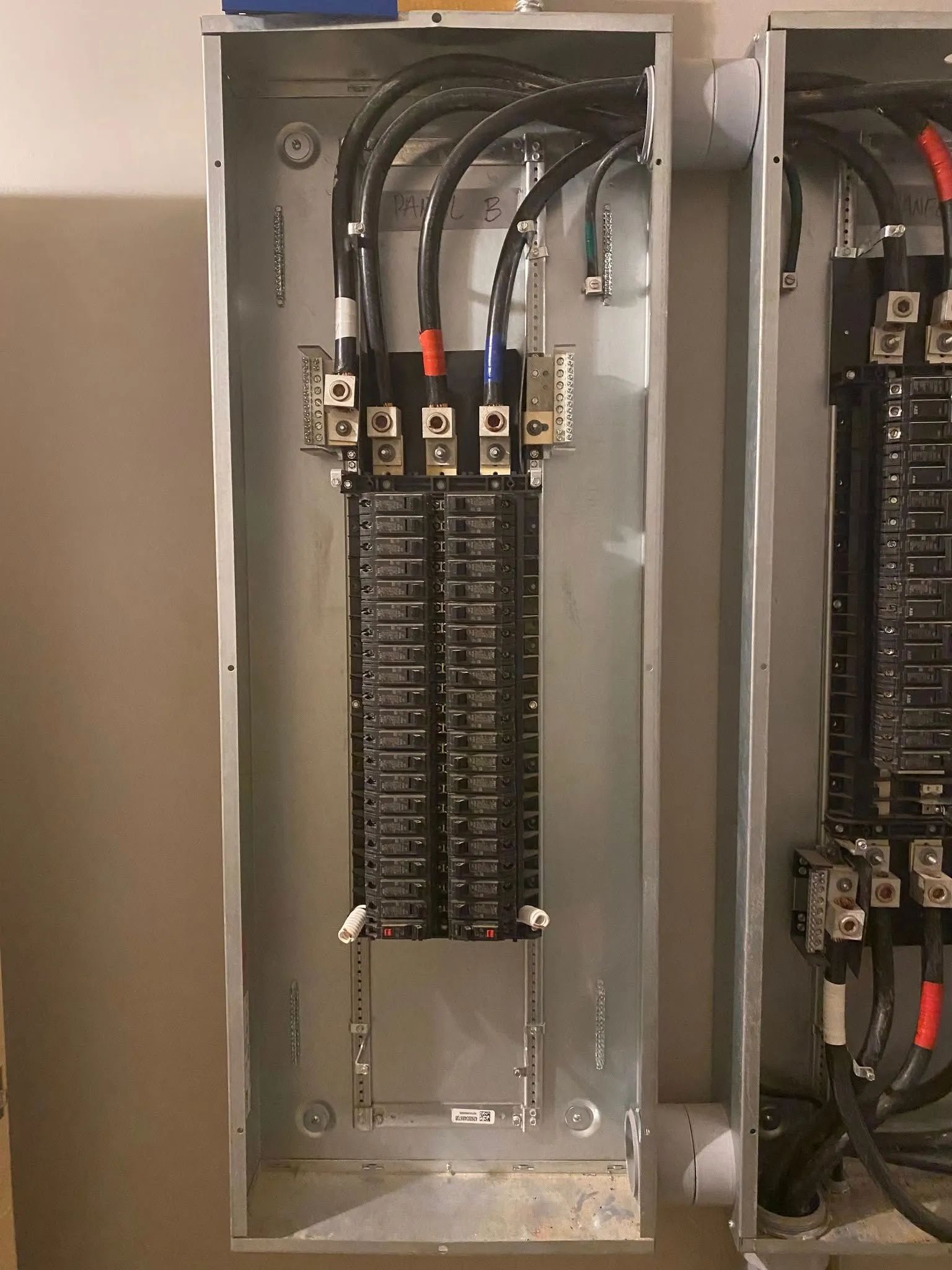
Picture the panel in your basement or garage right now. Is there an open slot left for another breaker, or is it packed edge to edge with wires doubled up wherever they'd fit? A lot of homeowners in Rome and across Floyd County don't think about their panel until something forces the issue: a contractor says there's no room for the hot tub circuit, an insurance adjuster flags it during a policy review, or the lights dim every time the air conditioner kicks on.
That moment of "wait, is this actually a problem" is worth taking seriously. A panel that's aged out or was never sized for how your home is used today isn't just an inconvenience. It's a fire and shock risk hiding behind a metal door you probably haven't opened in years. This guide walks through the physical signs, the amperage math, and the life events that typically mean it's time to have your panel evaluated by someone qualified to look inside it.
Physical and Behavioral Warning Signs
Some signs of panel trouble show up in how your home behaves day to day, and others you can spot just by looking at the panel from the outside.
Breakers tripping on more than one circuit is a bigger red flag than a single overloaded outlet. One breaker tripping repeatedly usually points to a specific overloaded circuit or a faulty appliance. But when breakers across your whole panel start tripping, especially when you run multiple things at once, that's a sign the panel itself can't keep up with total household demand anymore.
A panel with no open slots left is telling you something. If every slot is filled and there's nowhere to add a breaker for a new appliance, a finished room, or an EV charger, you've hit a hard physical limit. Some panels can be reconfigured with tandem breakers in specific slots, but that's a decision for a licensed electrician to make, not a DIY workaround.
Double-tapped breakers are a common but serious defect. This happens when two wires get crammed under a single breaker terminal that was only designed to hold one. It's often a sign someone ran out of space and improvised instead of upgrading the panel. Double-tapped connections can loosen over time, arc, and overheat, and they're one of the most frequent issues flagged during home inspections.
Rust, corrosion, or discoloration inside or around the panel means moisture or heat damage. A little dust is normal. Rust streaks, corroded breaker terminals, or scorch marks around the panel are not. These are signs that components have been running hotter than they should, or that water has gotten into the enclosure at some point.
A warm panel cover or a burning smell means stop and call someone now. The metal cover of your panel should feel neutral to the touch, not warm. If it's warm, or if you catch a faint burning or plastic smell near the panel, that's not a "keep an eye on it" situation. Loose connections and overloaded breakers generate heat, and heat inside an electrical panel is how fires start.
Flickering lights when the microwave or AC kicks on suggest the panel is struggling to distribute power evenly. An occasional flicker isn't automatically an emergency, but if it happens consistently whenever a large appliance draws power, your panel may be working harder than it's rated to.
What Amperage Actually Means for Your House
Every electrical panel has a rated amperage, the maximum amount of electrical current it can safely deliver to your home at once. Older homes across Northwest Georgia, especially ones built before central air conditioning became standard, were often wired for 60 or 100 amps. That was plenty for a mid-century household running a few lights, a refrigerator, and maybe a window unit.
Modern life asks a lot more of a panel. Central HVAC, an electric range, a dryer, multiple TVs, computers, and chargers running at the same time all draw from the same limited pool of amperage. Most homes today are better served by 150 to 200 amp service, and homes with an electric vehicle, a workshop, or significant home office equipment often lean toward the higher end of that range.
Here's the mechanism worth understanding: a panel doesn't just quit the moment you exceed its rating. Instead, breakers start tripping more often as a kind of built-in safety response, cutting power before wires overheat. If you keep resetting breakers instead of addressing the underlying capacity problem, you're treating the symptom while the actual mismatch between your home's demand and your panel's supply stays in place. Over months or years, that repeated strain on breakers and connections raises the odds of a failure that isn't just inconvenient.
Tip: Before you assume your panel needs a full upgrade, take note of exactly when the problems happen. Trips that coincide with specific appliances running together, like the dryer and the microwave at the same time, can sometimes point to a load balancing issue rather than a total capacity shortfall. Either way, that pattern is useful information to hand to an electrician doing a load evaluation.
What a Panel Upgrade Actually Involves
At a high level, an upgrade means replacing your existing panel with a new one rated for higher amperage and built with more breaker slots for future circuits. It's not simply swapping one box for another. An electrician evaluates your home's total electrical load first, accounting for everything currently running plus anything you're planning to add, then sizes the new panel to match.
The process requires a coordinated power shutoff, since the main panel is the point where utility power enters your home before it's distributed to every circuit. That shutoff is planned and brief, not something done casually. Once the new panel is installed, wiring is reconnected, circuits get relabeled, and everything gets inspected to confirm it's grounded and operating safely before power is fully restored.
This isn't a weekend project, and it isn't a job for a confident do-it-yourselfer with a multimeter. The main panel is the single point in your home's electrical system where a mistake carries the highest consequence.
What You Can Check Yourself, and What to Leave Alone
You don't need any electrical training to notice most of the warning signs described here. Standing in front of your panel and looking at the outside is safe. Watching how your lights behave when appliances run is safe. Counting open breaker slots from the outside is safe. None of that requires touching a single wire.
Warning: Do not open your panel's dead front cover, touch breakers, or attempt to add or move a breaker yourself. Even with the main breaker switched off, some components inside a panel can remain energized, and panels carry enough current to cause serious injury or death. If you notice any of the warning signs above, especially heat, a burning smell, or visible scorching, treat it as urgent. Shut off power at the main breaker only if you can reach it without touching anything else inside the panel, and call a licensed electrician immediately rather than investigating further yourself.
The line between DIY-safe observation and call-a-pro territory is really that simple. Look, listen, and smell from the outside. Leave everything past the panel door to someone licensed to be in there.
Frequently Asked Questions
How do I know if my panel is 100 amp or 200 amp?
The amperage rating is usually printed on the main breaker at the top of the panel, or on a label inside the door. If you can't find it or aren't comfortable opening the panel, an electrician can identify it quickly during a visit without any guesswork on your part.
Can I add a new circuit if my panel still has open slots?
Having an open slot doesn't automatically mean there's enough total capacity for a new circuit. A licensed electrician needs to confirm the panel's overall amperage can support the addition safely, not just that there's a physical space for another breaker.
Is a warm panel always an emergency?
Not always, but it should never be ignored. A panel that's warm to the touch usually means a loose connection or an overloaded circuit is generating heat, and that pattern tends to get worse rather than better on its own. Have it checked promptly rather than waiting to see if it resolves itself.
Does upgrading my panel mean rewiring my whole house?
Not necessarily. A panel upgrade replaces the central distribution point, and in many homes the existing circuit wiring stays in place and gets reconnected to the new panel. Older or damaged wiring found during the evaluation may need separate attention, but that's assessed case by case.
How long does a typical panel upgrade take?
Most panel replacements are completed in a day, though the exact timeline depends on your home's layout and the scope of work involved. Your electrician can give you a more specific estimate once they've evaluated your existing setup.
What's the difference between a panel upgrade and a service upgrade?
A panel upgrade generally refers to replacing the breaker box itself. A service upgrade can also include increasing the size of the wire and connection coming from the utility to your home. Many projects involve both at once, since a higher-amperage panel usually needs a matching service line to support it.
Keeping Your Home's Power Supply Ahead of Its Demands
An electrical panel is easy to ignore until it isn't. Most homeowners never think about theirs until a breaker won't stay reset, a contractor can't find room for a new circuit, or an inspection report shows up with the panel circled in red. Catching the signs early, the rust, the warmth, the constant trips, the full panel, gives you room to plan an upgrade on your own timeline instead of dealing with it as an emergency.
A safe, reliable electrical system starts with a panel that actually matches what your home asks of it every day. Wright Electrical Services LLC
has spent 26
years working on homes and businesses throughout Rome, GA, and the surrounding areas and panel evaluations are a regular part of that work. The team performs full load evaluations, replaces undersized or aging panels with properly rated equipment, and handles the coordinated shutoff and inspection process safely from start to finish, for residential, commercial, and industrial properties alike. Licensed and insured, and ready to look at what your panel can and can't handle. If any of the signs in this guide sound familiar, schedule a panel evaluation before a small warning turns into an urgent one.