Flickering or Dimming Lights? What's Behind It
Quick Answer: A single bulb flickering on its own usually points to a loose connection at the socket or a dimmer switch that isn't built for the bulb type installed. Lights that dip for a second when a large appliance starts, then recover, are typically a normal side effect of that appliance drawing extra current the instant it turns on. Flickering that spreads across several rooms, happens with no clear trigger, or affects the whole house at once is a different story — that pattern usually traces back to a loose connection somewhere upstream, from the breaker panel to the main service connection, and it needs a licensed electrician's attention. Arcing connections are a leading cause of home electrical fires, so flickering paired with a burning smell, warm switch plates, or discolored outlets is never something to wait out. If you're unsure which category your flickering falls into, shutting off the affected circuit at the panel and calling a professional is always the safer move than continuing to use it.
The hallway light dips for a half-second every time the air conditioner kicks on, then steadies right back out. You've noticed it. You've probably also decided it's not worth thinking about. Somewhere else in the same house, the kitchen fixture has started strobing at random — no appliance running, no pattern you can pin down, just an occasional flicker that seems to happen whenever it wants.
Both of those get called "flickering lights." They are not the same problem. Treating them the same way is how a five-minute fix turns into a missed warning sign.
Flickering ranks among the more common calls an electrician gets, and it should. It's visible, it's irritating, and it can mean almost anything: a bulb worked loose in its socket, or a connection failing somewhere behind drywall you'll never see. The pattern of where and when it happens tells you far more than the flicker itself does. That's the real starting point, before anyone reaches for a bulb, a screwdriver, or the phone.
Reading the Pattern First
Sort what you're seeing into one of a few categories before guessing at a cause. The category matters more than the flicker.
One bulb, one fixture, consistent flicker. A single light that flickers no matter what else runs in the house is almost always a contained problem — the bulb, the socket, or the switch feeding that one fixture.
Brief dimming tied to a specific appliance starting. Lights that dip for a moment when the air conditioner or a well pump kicks on, then recover within a second or two, are usually just reacting to a normal event. Motors and compressors pull noticeably more current the instant they start than they do once running, and that momentary draw can show up as a quick dim on nearby circuits.
Flickering in more than one room at the same time. This points to something shared between those circuits, most often the panel itself or a connection point several circuits depend on.
Flickering throughout the entire house, with no obvious trigger. This is the pattern that deserves the fastest attention. It usually means the issue sits upstream of any single circuit — at the main service connection or inside the panel where power first enters the building.
Four categories. Four very different starting points for a diagnosis.
What Usually Causes a Single Fixture to Flicker
A bulb that isn't fully seated is the most common cause of flickering by a wide margin. Vibration from a door closing, a ceiling fan running nearby, even foot traffic on the floor above, can work a bulb loose enough to lose steady contact. Switch it off, let it cool, and snug it back into the socket. That fixes more flickering complaints than any other single step.
Dimmer switches cause more of these calls than most homeowners expect. Older dimmers were built around incandescent bulbs, which draw power differently than LED bulbs do. Put an LED bulb on a dimmer that wasn't designed for it and you'll often get flickering, a faint hum, or a light that never quite reaches full brightness no matter where the slider sits. A dimmer labeled for LED or CFL use usually clears it up, and swapping one out is a quick job for an electrician.
Sockets and switches wear down, too. Both contain moving contact points, and repeated use takes a toll over years. A socket showing dark discoloration, or a switch that feels loose or pops when you toggle it, has reached the end of its safe service life. Replace it. Don't keep testing how much longer it can hold on.
If a new bulb and a compatible dimmer don't stop flickering in a single fixture, the wiring feeding that fixture — or the switch controlling it — needs a look from someone qualified to open the box.
When More Than One Room Is Involved
Kitchens are the textbook case of an overloaded circuit. A coffee maker, a toaster, and a microwave sharing one circuit can pull enough combined current that the lights on that same circuit visibly dim while everything runs at once. It's usually not dangerous in the moment. But it is a sign the circuit is doing more work than it's rated for, and that's worth having evaluated rather than routed around indefinitely.
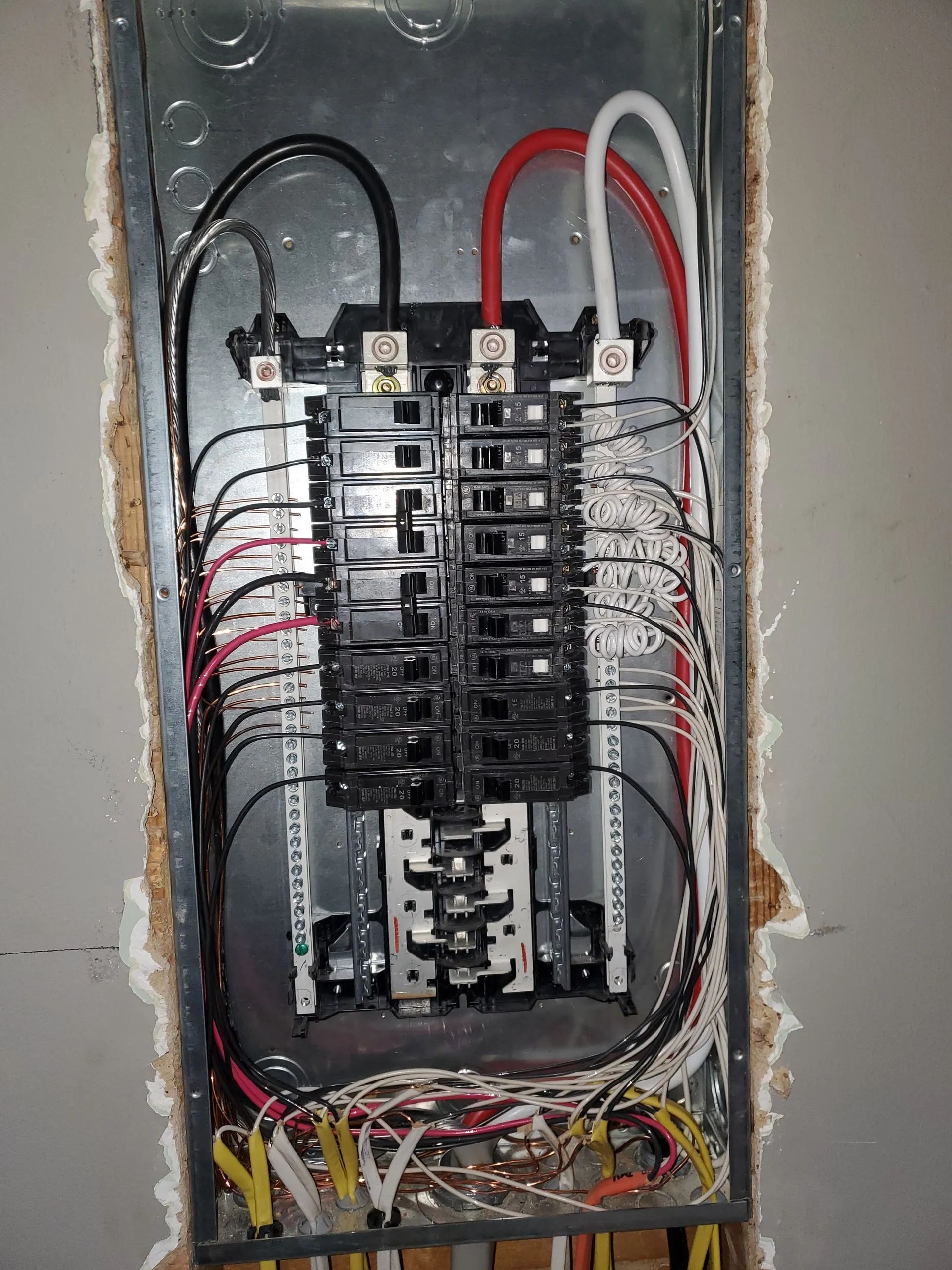
Loose connections at the panel or inside a junction box are a more serious version of the same idea. A connection that isn't fully tightened creates resistance, and resistance generates heat — that combination is exactly how arcing starts, and arcing is one of the more serious causes of electrical fires in homes. Flickering caused by a loose connection tends not to follow any appliance. It shows up at random, sometimes worse on windy days when the house shifts slightly, sometimes for no reason you can find.
Age plays a role too. A meaningful share of the housing stock across Rome and Floyd County predates today's electrical demand, and decades-old wiring degrades gradually instead of failing all at once. Flickering that's crept up over months, rather than showing up overnight, often reflects that slow wear rather than a sudden fault.
Tip: Keep a simple log for a week or two before your electrician's visit. Note the time of day, which lights were affected, and whether an appliance was running when it happened. That pattern is often the single most useful piece of information for narrowing down the cause quickly, and it can shorten the diagnostic visit considerably.
Whole-House Flickering and the Main Service Connection
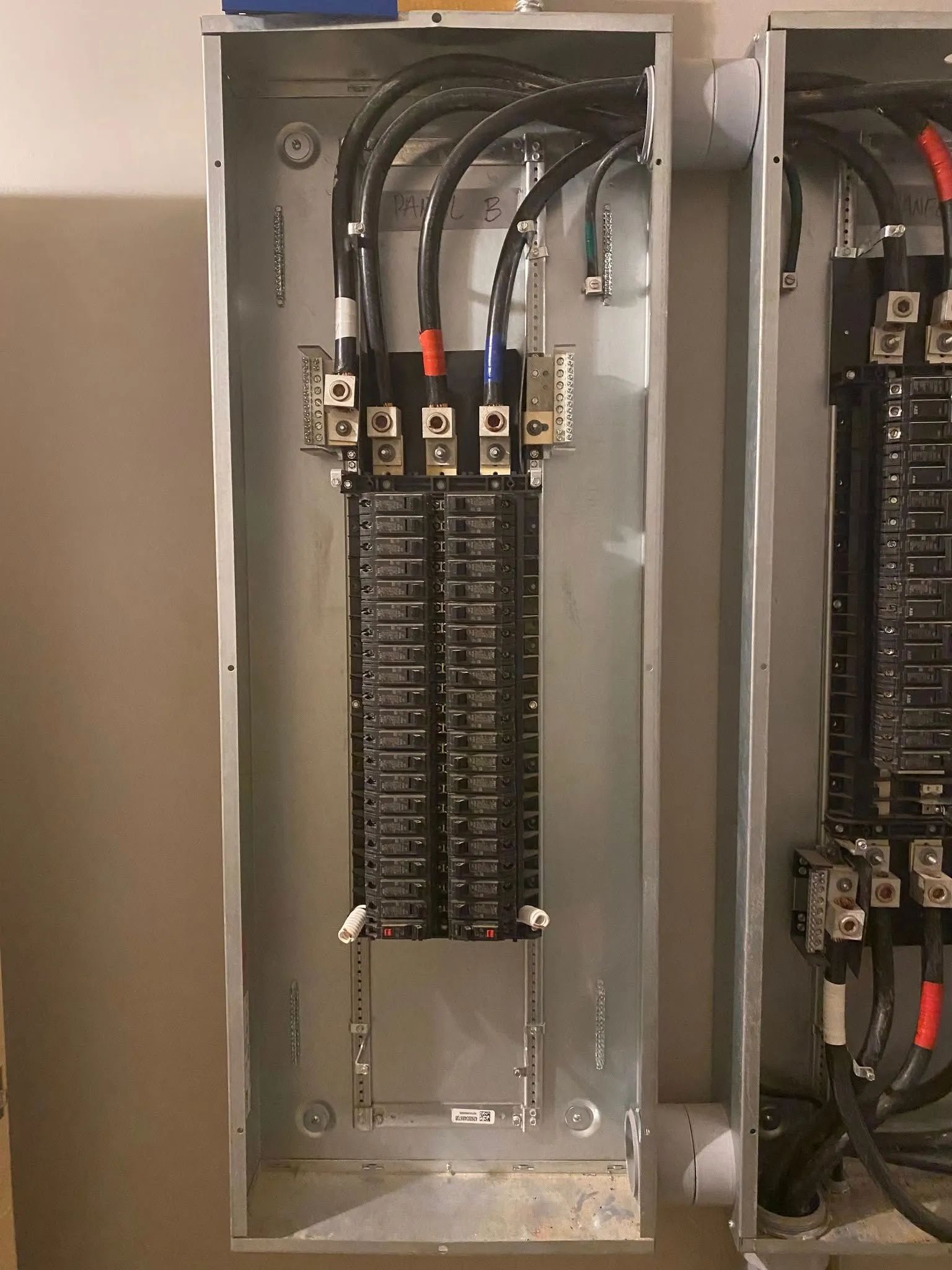
Flickering that hits every room at roughly the same time belongs in its own category, and it should be treated that way. This pattern almost always points to something at or near where power enters the home: a loose connection at the main panel, a failing main breaker, or wiring at the service entrance that's starting to fail.
Every circuit in the home depends on that main connection. A fault there carries more consequence than a fault confined to a single outlet, and it's the part of the system carrying the most current — so a loose connection in that spot generates more heat than the same kind of looseness would generate anywhere else in the house.
Warning: Do not open your panel, tighten connections, or investigate a suspected loose main connection yourself. Even with the main breaker switched off, components inside the panel and the service connection itself can remain energized. If your lights flicker throughout the house, especially alongside a burning smell, warm outlets, or breakers tripping at the same time, shut off power at the main breaker only if you can reach it without touching anything else, and call a licensed electrician right away rather than continuing to investigate on your own.
Storms, the Grid, and Northwest Georgia's Weather
Not every flicker starts inside your walls. Storms move through Northwest Georgia regularly, and high wind or a nearby lightning strike can cause brief voltage swings on the utility side that show up as flickering in every home on a shared line. Heavy demand on a hot summer afternoon, with air conditioners running across the whole region at once, produces a similar effect.
The simplest way to sort out where the problem lives: ask a neighbor. If their lights flicker at the same moment yours do, and nothing unusual is running inside your home, the utility company is the right first call. If your house is the only one affected on a calm, quiet day, an electrician is the better next step.
Homes running close to their panel's capacity tend to feel these external swings more than homes with newer, properly sized service. And repeated exposure to voltage fluctuations, even ones that start outside the house, adds wear to connections and equipment over time — a little at a time, invisibly, until it isn't invisible anymore.
What's Safe to Check Yourself, and What Isn't
Diagnosing flickering doesn't take electrical training up to a point. Reseating a bulb with the switch off is safe. Watching for patterns tied to specific appliances is safe. Noting which rooms are affected, and when, is safe. None of it involves touching a wire or opening anything.
The line moves the moment a panel cover, a switch plate, or a junction box enters the picture. Loose connections, worn breakers, and service-side wiring all carry enough current to cause serious injury, and a flickering light is often the only visible symptom of a problem hidden behind a wall or inside a metal box. If reseating a bulb and testing a different dimmer doesn't resolve it, stop troubleshooting there. That's the point to bring in someone licensed to go further.
Frequently Asked Questions
Why do my lights flicker every time the air conditioner turns on?
Usually a normal reaction to the AC drawing extra current the instant its compressor starts. If the dip lasts less than a second and the lights snap back to full brightness right away, it typically isn't a cause for concern. If the dimming lasts several seconds or has gotten more noticeable over time, have a load evaluation done to rule out an undersized panel or a loose service connection.
Can a bad dimmer switch really cause an LED bulb to flicker?
Yes, and it's one of the most common causes in homes that have switched from incandescent to LED bulbs. Traditional dimmers weren't built for how LED bulbs draw power, and pairing the two often produces flickering, a hum, or a bulb that won't dim smoothly. An LED-rated dimmer usually resolves it.
Is it dangerous if only one light flickers and everything else is fine?
It's usually the least serious version of this problem, often traced back to a loose bulb or a worn socket. Still worth addressing rather than ignoring, since a socket or switch that keeps degrading can eventually fail or overheat. It just doesn't carry the same urgency as flickering that spreads across multiple rooms or the whole house.
Why do all the lights in my house flicker at the same time?
Whole-house flickering usually points to something at the main service connection or the panel itself, not an individual circuit. It could be a loose main connection, a failing breaker, or in some cases a utility-side issue affecting your line. Because it touches every circuit in the home at once, this pattern calls for a licensed electrician's attention rather than a wait-and-see approach.
How do I know if flickering is coming from my house or from the power company?
Ask a neighbor on the same utility line. If their lights flicker at the same time yours do, and nothing unusual is running inside your home, the issue is likely external and worth reporting to your utility provider. If your home is the only one affected, the more likely explanation sits inside your own electrical system.
Should I just replace all my bulbs if my lights keep flickering?
Not necessarily. Bulb quality can contribute, especially cheap LED bulbs paired with incompatible dimmers, but swapping bulbs without addressing a loose connection, an overloaded circuit, or aging wiring just hides the pattern for a while. If flickering continues after trying a known-good bulb, the cause is more likely in the switch, the wiring, or the panel than in the bulb itself.
Flickering Rarely Fixes Itself
A light that flickers once and never does it again is easy to forget about. One that keeps doing it, or starts showing up in more than one room, is telling you something about the condition of the connections behind your walls. That's information worth acting on, not living with. An occasional dip when the AC starts is a different situation entirely from a fixture that strobes at random or a house where every room dims at once — and mixing those two up is how a minor annoyance turns into an emergency call.
Schedule a
flickering-lights diagnostic
— Wright Electrical Services LLC
traces the exact cause behind a single stubborn fixture or whole-house flickering, from a worn socket to a loose connection at the main panel, and repairs it at the source instead of masking the symptom. With 26
years serving Rome, Cartersville, Calhoun, Cedartown, Armuchee, Summerville, Cave Spring, Rockmart, Adairsville, and the rest of Floyd County and Northwest Georgia, the licensed and insured team handles residential, commercial, and industrial properties alike. Book an electrical evaluation before an occasional flicker turns into a bigger problem.