Breakers Tripping Over and Over? What's Overloading Your Panel
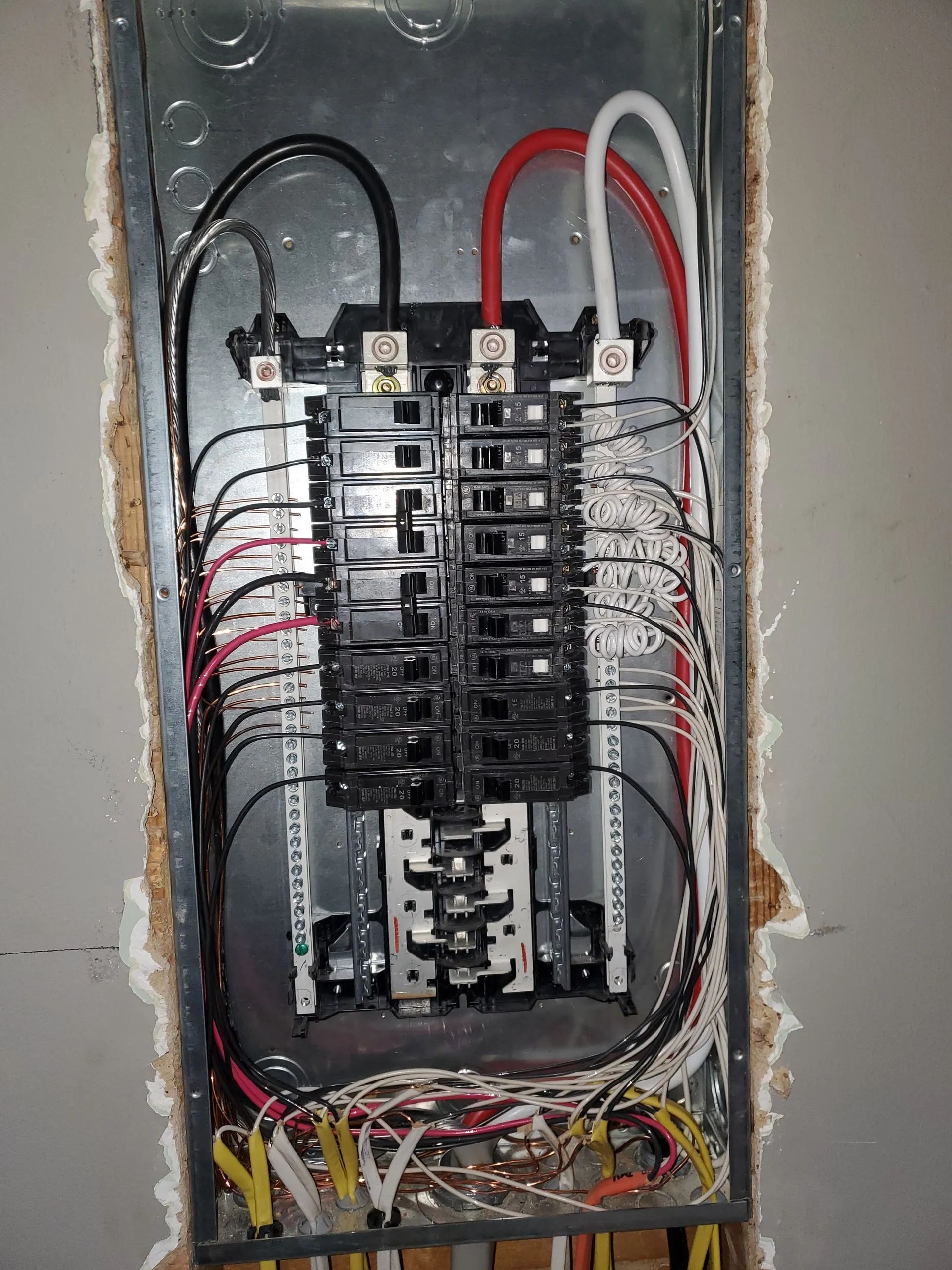
Quick Answer: A breaker that trips once in a while is doing exactly what it's supposed to do — cutting power before a wire overheats. A breaker that trips over and over, especially on the same circuit or right after you reset it, usually means that circuit is carrying more load than it was built for, or something more serious like a short or a ground fault is happening behind the wall. Start by unplugging everything on that circuit and resetting the breaker once. If it holds, add appliances back one at a time to find the culprit. If it trips again with nothing plugged in, or if you notice a burning smell, warm outlets, or scorch marks near the panel, shut off power to that circuit and call a licensed electrician instead of resetting it again.
In a lot of Rome and Floyd County kitchens, the pattern looks the same. The microwave clicks on while the air fryer is already running, and somewhere down the hall a breaker snaps off mid-dinner. Reset it once and it's a minor annoyance. Reset it three times in a week, and it's telling you something: the circuit, or maybe the whole panel, is carrying more than it was built to handle.
It helps to respect what a breaker is actually doing before you start poking around. It isn't malfunctioning when it trips. It's cutting current before a wire overheats, insulation degrades, or a fire starts somewhere behind a wall you can't see. The point isn't to force it to stay on. It's to figure out why it keeps shutting off, fix the real cause, and know where DIY troubleshooting ends and a phone call begins.
Safety Comes Before Troubleshooting
Shut off power to the circuit before you inspect anything
Don't reach into an outlet, a switch box, or an appliance while the circuit is still live. Flip the breaker to OFF at the panel first, then look around. Poking at a circuit that's still tripping and un-tripping while you work is how people get shocked.
Never hold a breaker in place or tape it down
Some homeowners jam a breaker into the ON position so it stops flipping back off. That defeats the whole purpose of the device and lets current keep flowing through a circuit that already told you something's wrong. A breaker that won't stay reset needs a diagnosis, not a workaround.
Watch for the signs that mean stop right now. A burning or rubbery smell near an outlet or the panel. Discoloration around a switch plate. A breaker that's warm to the touch, or buzzing and crackling sounds. Scorch marks anywhere near the wiring. None of those are do-it-yourself situations — shut off the circuit at the panel and call an electrician the same day.
The Most Common Cause: An Overloaded Circuit
Most repeated tripping traces back to one thing: a circuit trying to deliver more amperage than its wire gauge and breaker rating allow. Every circuit in your panel is sized for a specific load, usually 15 or 20 amps for general household circuits. Once everything plugged into it adds up past that number, the breaker interrupts the flow before the wire inside the wall heats up.
Kitchens carry the heaviest daily load
A microwave, toaster, coffee maker, and air fryer running at once on one countertop circuit can easily push past 15 or 20 amps, especially in homes built before small kitchen appliances became a normal part of daily cooking. It's one of the most common overload patterns out there — and one of the easiest to fix once you spot it.
Seasonal spikes add strain that isn't there the rest of the year. Window air conditioners, space heaters, and holiday lighting all pull real current, and they're often plugged into circuits that were never meant to carry that kind of load. A circuit that behaves fine in April can trip constantly by July or January once a window unit or a space heater joins the mix.
Older homes across Northwest Georgia frequently have fewer circuits than a modern household needs
A house built decades ago near Rome, Cave Spring, or Armuchee may have been wired for a much smaller set of appliances than what a family runs today — computers, streaming devices, phone chargers, a second refrigerator out in the garage. When there aren't enough dedicated circuits to spread that load around, a handful of circuits end up doing the work meant for many.
Extension cords and power strips are a workaround, not a fix. Relying on them to reach outlets that don't exist where you need them usually means several devices are funneling through one circuit that was already close to its limit.
Signs the Problem Is the Panel, Not Just One Circuit
Sometimes the issue isn't one overloaded circuit. It's a panel that can no longer keep up with how the property actually gets used day to day.
The panel is more than 25 to 30 years old
Panels installed decades ago were sized for the demands of that era, not for central air, multiple computers, EV chargers, and modern kitchens running at once. Age alone doesn't make a panel unsafe, but it's a strong reason to have someone take a look.
Multiple circuits trip, not just one. If trips are showing up in different rooms rather than the same overloaded outlet every time, that points to a system stretched thin across the board rather than one specific trouble spot.
There's no room left for new circuits
A panel already packed with breakers, with no open slots, can't take on a new appliance, a home office, or a future EV charger without a service capacity upgrade first.
The home still has a fuse box, or an older panel type known for reliability problems. Fuse-based systems and certain older panel brands don't offer the same protective features as a modern breaker panel, and they tend to struggle under today's electrical loads.
Storm season brings more frequent trips
Homes and businesses across Northwest Georgia deal with seasonal storms and power fluctuations that put extra stress on a system already running close to its limit. A panel operating near capacity is the one that shows problems first when the grid itself gets shaky.
What a Professional Electrical Evaluation Looks At
When troubleshooting on your own doesn't fix the tripping, a licensed electrician works through the problem methodically instead of guessing.
A load calculation comes first. This measures the actual electrical demand of your property — existing circuits, major appliances, HVAC equipment, anything planned down the road — against what the panel and individual circuits can safely carry. This single step usually settles the question — one overloaded circuit, or a panel that's undersized for the property as a whole.
Diagnostic tools trace the actual fault instead of relying on guesswork. Infrared scanning picks up heat building behind a wall. Voltage and load testers measure how much current a circuit is really carrying. Insulation testers check for damaged or corroded wiring that could be causing an intermittent short or ground fault.
Hidden wiring gets traced, not just looked at. Loose connections and deteriorated insulation inside a wall don't show up from the outside no matter how carefully you inspect it. Tracing the full circuit path catches problems a visual check would miss every time.
Breakers, panels, or specific circuits get repaired or replaced based on what's actually found, not on a guess. Sometimes the fix is as small as swapping out one worn breaker. Other times, especially in older homes around Rome, the right long-term move is a panel upgrade that adds capacity, a new breaker, and modern protective features like arc-fault protection.
Warning: If your breaker trips immediately every time you reset it — even with everything unplugged — do not keep resetting it. That pattern usually points to a short circuit or ground fault, and resetting a live fault over and over can let current arc behind the wall each time. Shut off the circuit at the panel and have it evaluated before turning it back on.
Frequently Asked Questions
Why does my breaker trip immediately every time I reset it?
An instant trip, especially with nothing plugged into the circuit, usually points to a short circuit or a ground fault rather than an overload. Overloaded circuits tend to trip once you've added enough load to cross the limit. Shorts and ground faults trip the moment the breaker resets because the fault is already sitting in the wiring. This pattern calls for a licensed electrician, not another reset.
Is it dangerous if a breaker keeps tripping?
Yes. The breaker itself is doing its job by cutting power before wires overheat, but ignoring repeated trips lets the underlying cause keep going — an overloaded circuit, a failing appliance, damaged wiring. Left alone long enough, that path leads to overheated insulation and, in some cases, a fire.
Can too many appliances on one circuit actually damage the breaker?
Repeated tripping wears on a breaker's internal spring mechanism and contact points over time. A breaker that's tripped hundreds of times can grow less reliable — either tripping too easily or, in rarer cases, failing to trip when it should. If a breaker has been resetting often for months, it's worth having it tested rather than assuming it'll keep working the same way forever.
How do I know if the problem is my panel and not just one circuit?
Look at the pattern. Trips isolated to one outlet or one appliance usually point to a circuit-level issue. Trips showing up across multiple rooms, a panel that's decades old, or no available space for new breakers — that's a sign the panel itself no longer matches the property's electrical demand. A load calculation from a licensed electrician gives a clear answer either way.
Why does my breaker trip more often in summer or during storms?
Air conditioners and window units add real, continuous load to a circuit, and that extra draw is often enough to push an already-strained circuit past its limit once the hot months hit. Storms across Northwest Georgia can also cause voltage fluctuations that add extra stress to a system already running close to capacity.
Should I just replace the breaker, or could the wiring be the real problem?
Depends on what's actually causing the trip. If a breaker trips under a load it used to handle fine, the breaker itself may simply be worn out and due for replacement. But if trips continue after a new breaker goes in, the fault is almost always in the circuit or wiring rather than the breaker — and that means tracing the circuit to find what's really going on.
A Panel That Matches How You Actually Use Power
Electrical demand in homes and businesses across Northwest Georgia has changed a lot since many of these panels first went in. A circuit or a panel that trips again and again isn't being unreasonable. It's telling you, clearly and repeatedly, that the electrical system installed years ago no longer matches how the property gets used today. Addressing the real cause instead of resetting around it is what keeps a kitchen, a workshop, or an office running without interruption — and keeps the wiring behind the walls doing the job it was actually designed for.
A
breaker that keeps tripping
is one of the clearest signs an electrical system needs a closer look, whether the fix turns out to be a load calculation, a new dedicated circuit, or a full panel upgrade. Wright Electrical Services LLC
brings 26
years of hands-on experience diagnosing exactly this kind of recurring electrical issue for residential, commercial, and industrial properties across Rome, Georgia. Reach out to schedule a professional evaluation of your panel and get a clear answer on what's causing the trips and what it will take to fix them for good.