Outlets That Don't Work in Half the Room? Tracing the Problem
Quick Answer: When outlets stop working in only part of a room, the cause is usually a break in the chain that feeds them, not a room wide failure. The most common culprits are a tripped GFCI in another location, a breaker that looks on but has tripped halfway, or a loose wire connection at the last outlet that still works. Switch off anything plugged into the dead outlets, press RESET on every GFCI you can find, and reset the breaker fully off and then on. If power does not return, if the breaker trips again, or if you notice heat, a burning smell, or discoloration, stop and call a licensed electrician. Do not open outlets or panels to look for the fault yourself.
You come home, drop your keys, and reach for the lamp by the sofa. Nothing. You try the outlet on the other side of the room, and the television wakes up without a problem. The overhead light works. The phone charger on the nightstand works. But the three outlets along the long wall are dead, and so is the one beside the window. Nothing tripped, nothing flickered, and nothing smells odd. Half of a room simply went quiet.
That pattern feels strange, but it is actually one of the most useful clues an electrician can get. A dead zone with a clear edge means electricity is being interrupted at a specific point along its path, and finding that point is a matter of understanding how your wiring is laid out. This article explains how outlets share a circuit, why one weak link can take out several of them at once, which safe checks are worth your time, and which signs mean you should stop and let a professional trace the fault.
Safety First: What to Do Before You Start Checking
Dead outlets are often harmless, but the cause can sometimes be a connection that is overheating behind the wall. Before you do any troubleshooting, set a few ground rules.
Do Not Open Anything That Is Energized
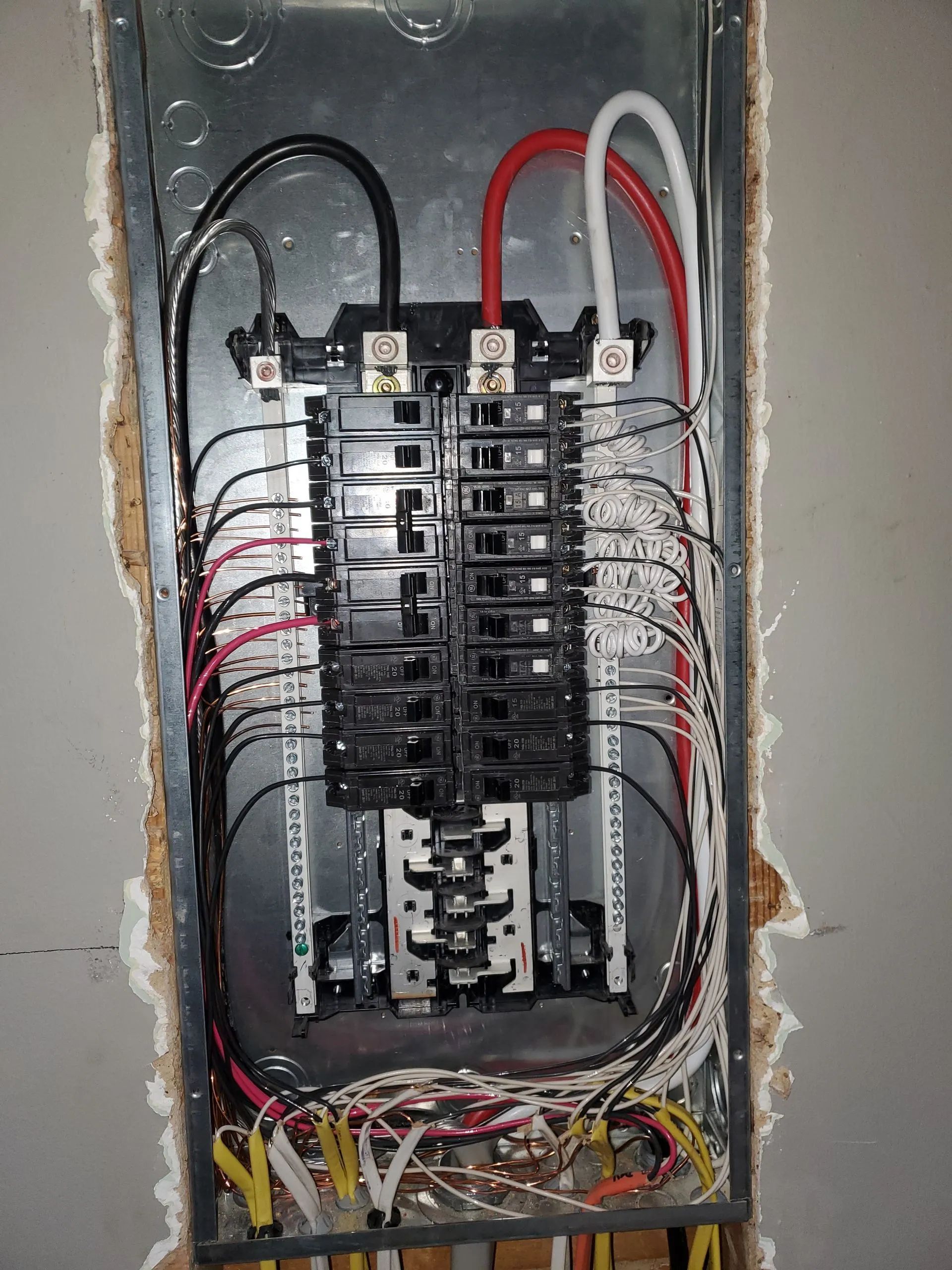
Never remove an outlet cover plate and pull the outlet out of the box while the circuit is live. Never open the door of your main panel to poke around inside. The cover plates and breaker handles are made for you to touch. Everything behind them is not.
Check For Warning Signs First
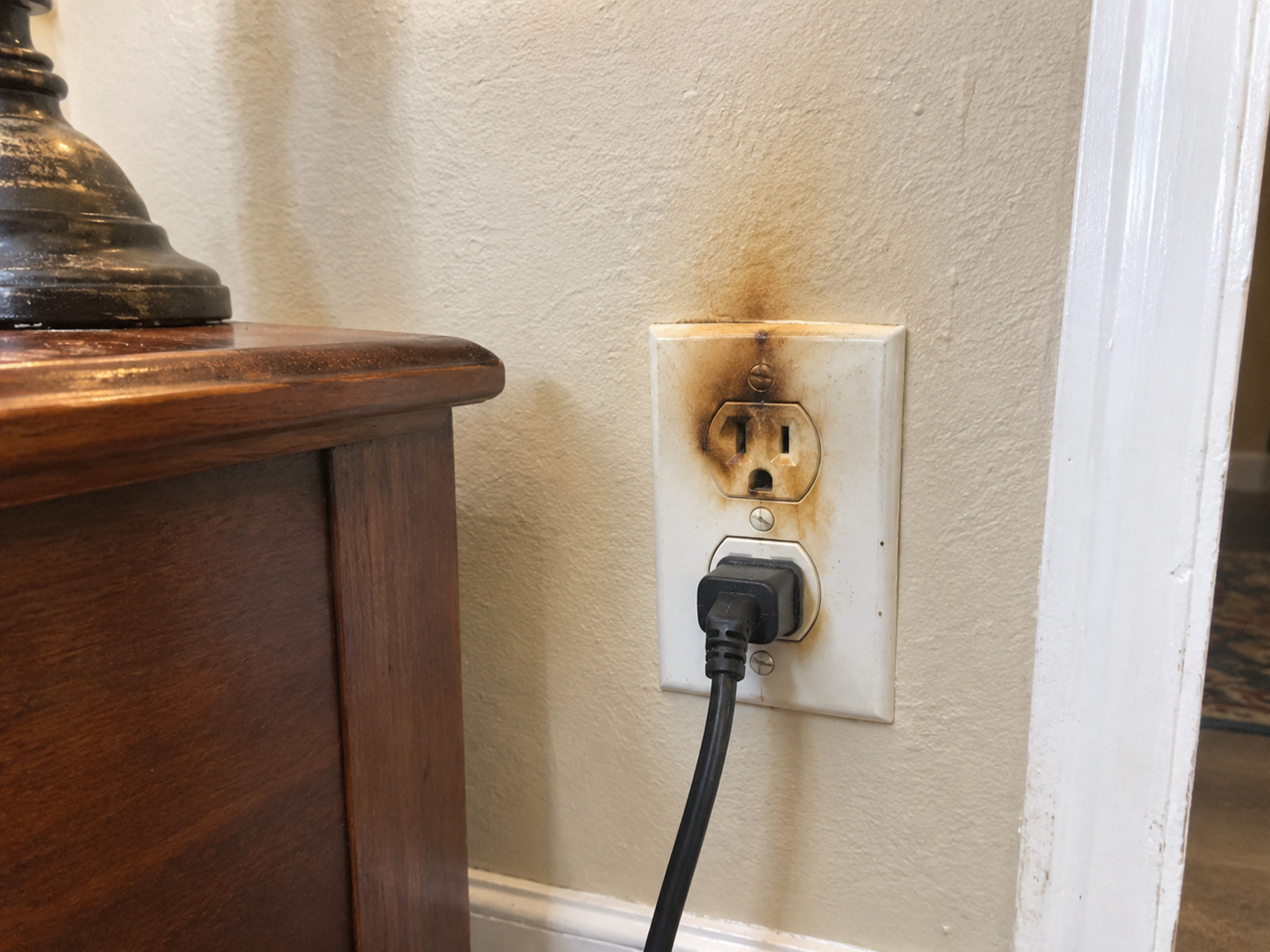
Put the back of your hand near the dead outlets and the ones beside them. If any outlet or cover plate feels warm, looks brown or yellow, smells like hot plastic, or makes a buzzing or crackling sound, do not keep using that circuit. Switch the breaker off, leave it off, and call an electrician.
Unplug Before You Test
Pull the plugs out of the dead outlets and the working ones nearby. This removes the chance that a faulty appliance or cord is the real problem, and it keeps your electronics from taking a hit when power returns suddenly.
Never Reset A Breaker Over And Over
A breaker that trips again right away is reporting a fault. Holding it on or resetting it repeatedly forces current through a problem that needs attention.
Warning: If you see scorch marks, smell burning, feel heat, or hear buzzing or popping at any outlet, switch off that circuit at the panel and leave it off. Do not test it, do not plug anything in, and call a licensed electrician right away.
How One Circuit Feeds Many Outlets
To make sense of a half dead room, it helps to picture how your wiring is built. Your home does not give every outlet its own line back to the panel. Instead, a single breaker feeds a cable that runs to the first outlet, continues to the second, and then to the third, and so on down the line. Electricians often describe this as a chain. Each outlet passes power along to the next one while also supplying whatever you plug into it.
A circuit rarely stays inside one room. A single breaker might feed three outlets in your living room, the outlets in the hallway, one in the dining room, and the lights in a different room altogether. That is why you can have working lights and dead outlets, or dead outlets in two rooms at once. The loss of power follows the wiring path, not the floor plan.
Here is the part that matters for tracing the problem. When something breaks the chain, every outlet downstream of the break loses power, while every outlet upstream keeps working. The dead outlets work as a map. The last outlet that still works sits right before the break, and the first dead outlet sits right after it. The fault is somewhere in that short stretch, and often at one of those two outlets or in the wiring between them.
Why this explains the edge. If the three outlets on the long wall and the one by the window are dead, but the outlets by the door still work, the break is likely between the door and the first dead outlet. That narrows a wide search down to a single link.
The Quick Causes Worth Ruling Out First
Before you assume the worst, there are several simple causes that account for a large share of dead outlet calls. These are safe to check without opening a single cover plate.
A Tripped GFCI Somewhere Else
A ground fault circuit interrupter, the outlet with the TEST and RESET buttons, protects its own receptacle and any outlets wired after it on the same line. Bathrooms, kitchens, garages, basements, and outdoor outlets commonly have them. If one of these has tripped, it can cut power to outlets in a completely different room that share its chain. Press RESET firmly on every GFCI outlet you can find, including the garage and the outdoor ones, even if they seem unrelated. A tripped outdoor GFCI after a rain shower is a classic reason for a dead bedroom wall.
A Breaker That Tripped Halfway
A tripped breaker does not always sit fully in the off position. Often the handle rests in the middle, and it can look almost normal at a glance. To reset it properly, push the handle firmly all the way to off, then switch it back on. If it flips right back or will not stay on, stop there. That means the circuit has a fault that a reset cannot fix.
The Appliance Or Cord Is The Problem
Plug a lamp you know works into the dead outlet. If the lamp lights, the outlet was fine and the original device was the issue. Also try a different outlet on the same wall to confirm the pattern.
A Switched Outlet
Some rooms have an outlet controlled by a wall switch, usually meant for a lamp. If the dead outlet is half of a duplex outlet, the top or bottom may be wired to a switch that is currently off. Flip the switches in the room and see whether anything changes.
Tip: Before you reset anything, take a quick photo of the panel and write down which outlets are dead. If the problem returns, you will have a record of the pattern, and an electrician can start tracing the chain instead of starting from scratch.
Loose Connections Behind the Wall
If the GFCI resets and the breaker checks do not bring the room back, the most likely explanation moves behind the wall. Loose connections are the leading cause of a break in the chain, and they hide in places you cannot see from the room.
Push In Connections At The Back Of An Outlet
Many outlets, especially in homes built or renovated over the past few decades, have small holes in the back where a wire can be pushed in without wrapping it around a screw. These are often called backstab connections. They hold a wire with a small spring clip, and over years of heating and cooling they can loosen. When one lets go, every outlet downstream goes dead. Because the outlet itself may look perfect, this is a common reason a room fails with no warning signs at all.
A Loose Wire Under A Terminal Screw
Even screw terminals can work themselves loose, particularly when a circuit has carried heavy loads for years. A wire that is barely touching creates resistance, and resistance creates heat. That is why a dead outlet can sometimes be a sign of a hot spot that has already damaged the connection.
A Failed Outlet In The Middle Of The Chain
Because the power continues through each outlet on its way to the next, one worn outlet can interrupt the whole line. The outlet may have an internal break, burned contacts, or a cracked body that opened the path.
A Hidden Junction Box
Sometimes cables are joined inside a box in an attic, a crawl space, or behind a ceiling. If a wire nut has slipped or a connection has corroded, everything past that point goes dead. These boxes can be difficult to find, which is why professional tracing matters.
Damaged Cable
A nail or screw driven during a remodel, a cable pinched during an addition, or rodent damage in an attic or crawl space can all cut a conductor. In older homes in Northwest Georgia, where renovations have been layered on top of original wiring over many decades, it is not unusual for a room to carry the history of several different projects.
Problems That Go Beyond One Room
Sometimes a dead zone is part of a bigger picture. Pay attention to what else is happening in your home, because it changes how urgent the situation is.
Several Rooms Affected At Once
If outlets in separate rooms are dead together, a shared connection upstream is the likely cause, or a hidden junction box feeds them all. This is a job for professional tracing.
Lights That Flicker Or Surge Elsewhere
If lights in other parts of the house dim, brighten, or flicker while some outlets are dead, there may be a problem with a neutral connection or the incoming service. In that case, turn off sensitive electronics and call an electrician. Do not wait for the next storm to find out how serious it is.
Aluminum Branch Wiring
Homes built roughly between the mid 1960s and early 1970s sometimes have aluminum wiring on their branch circuits. Aluminum expands and contracts more than copper and can loosen at connections more easily, which is a recognized fire risk. If your home is from that period and has a dead outlet zone, mention the home's age when you call so the electrician can plan accordingly.
Older Homes And Mixed Wiring
Houses in Rome, Cartersville, Cedartown, and across Floyd County often show a blend of wiring from different eras. Original cloth covered cable may have been extended with newer wiring, and outlets may have been replaced several times. Each splice is another place where a connection can fail.
Storm Related Damage
Lightning, surges, and long outages can stress connections and trip protective devices. If your dead outlets appeared after a storm, mention that detail. It points toward a surge or a tripped GFCI before it points toward a gradual wiring failure.
What You Can Safely Check Yourself
Here is a short, safe routine that stays outside the walls and the panel. Work through it in order, and stop whenever you hit a warning sign.
Step One: Confirm The Pattern
Test each outlet in the room with a lamp you know works. Note exactly which ones are dead, which work, and which switches control what.
Step Two: Reset Every GFCI
Look in bathrooms, the kitchen, the garage, the basement, and outside. Press RESET firmly on each one. If one will not stay reset, leave it alone and note which it was.
Step Three: Reset The Breaker The Right Way
Find the breaker for the room, push it fully to off, then back on. If you are not sure which breaker is correct, check the panel directory and look for any handle that rests in the middle position. Do not open the inside of the panel.
Step Four: Look At What Is Plugged In
A heater, a vacuum, or a hair dryer on a shared circuit can trip a breaker in the moment. Unplug heavy loads and try again with only a lamp.
Step Five: Stop If Nothing Changes
If the dead zone remains, the fault is almost certainly a connection inside a wall or box. That is the point where a licensed electrician needs to take over, with a meter and the training to work around live wiring safely.
What You Should Not Do
It is tempting to grab a screwdriver and look inside the outlet. Resist that urge. Cover plates can hide scorched wire, and an outlet that looks fine can still hold live voltage on a wire you cannot see. A dead outlet is not always a dead wire. Part of the circuit can be energized even when the outlet has no power.
Do not swap in a new outlet without understanding why the old one failed. If a loose connection or an overloaded circuit caused the damage, a new outlet will meet the same fate. Do not run an extension cord from a working room to a dead one as a permanent fix. Cords are meant to be temporary, and running them for long stretches, especially under rugs, can overheat. Also avoid plugging a power strip into another power strip. It only masks the problem and adds more heat.
What an Electrician Does to Trace the Fault
A professional trace follows the chain the same way you do, with better tools and better knowledge. The electrician starts by confirming which outlets are dead and mapping the likely order of the circuit. A meter then shows where voltage stops. With power safely controlled, the electrician inspects the last working outlet and the first dead one, checking for loose wires, burned terminals, and weak backstab connections.
If those outlets are sound, the search moves on to junction boxes, ceiling connections, and cable runs. A good repair does more than restore power. It corrects the connection that failed, checks the neighboring outlets for similar wear, and looks for signs of overheating that might point to a bigger issue. When a circuit has several tired connections, replacing the whole run of weak points is often better than fixing one and waiting for the next to fail.
Tip: Tell the electrician what you observed: which outlets are dead, what changed before it happened, whether a storm or a new appliance was involved, and what you already tried. Those details can shave a lot of searching off the trace.
Preventing the Next Dead Zone
Outlets that quit rarely fail without warning signs. Looking back, many homeowners recall a faint buzz, a loose plug, a flickering light, or an outlet that grew warm in the weeks before. Paying attention to those signals gives you a head start.
Do Not Overload One Chain
Spread heavy loads like space heaters and portable air conditioners across different circuits instead of running them side by side on the same wall.
Test Your GFCIs Monthly
Press TEST, confirm the outlet clicks off, then press RESET. A device that no longer responds should be replaced.
Replace Worn Outlets
If a plug slides out of an outlet easily, or if the outlet cracks, discolors, or feels loose in the wall, schedule a replacement before it fails entirely.
Schedule An Inspection For Older Homes
A review of outlets, panels, and visible wiring catches loose connections while they are still easy to correct.
Frequently Asked Questions
Why are some outlets in my room dead while the lights still work?
Lights and outlets often run on separate circuits, so a break in one chain leaves the other untouched. They may also share a circuit with a break between them. The pattern shows where power stops.
The breaker looks fine. Could it still be tripped?
Yes. A tripped breaker often rests in a middle position that looks almost on. Push it fully off, then back on. If it trips again right away, leave it off and call a licensed professional.
Can a GFCI in the bathroom or garage kill power to a bedroom?
It can. A GFCI protects every outlet wired after it on the same line, even in other rooms. Press RESET on every GFCI, including the garage and outdoor ones, before assuming the problem is local.
Is it safe to keep using the working outlets in the same room?
It depends on the cause. With no heat, smell, or noise, light loads on working outlets are usually fine for now. Any warmth, buzzing, or burning smell means you should shut the circuit off completely.
Should I replace the dead outlet myself?
Replacing an outlet means working near live wiring, with a shock risk if the circuit is not properly controlled. A failed outlet is often a symptom of a loose connection elsewhere that needs professional tracing.
Why did the outlets go dead after a storm?
Storms can trip GFCIs, send surges through the system, and stress aging connections. Start by resetting every GFCI and the breaker. If power does not return, have an electrician check the circuit for surge damage.
Restoring Safe Power to Every Outlet You Use
A room that is half dead is telling you exactly where to look. The edge between working and dead outlets points toward one weak link, and simple steps like resetting every GFCI and cycling the breaker fully often solve the problem in minutes. When those checks fail, the fault almost always sits inside a wall or box, where a loose wire or worn outlet needs trained hands and the right meter to find safely. Until then, leaving the walls closed is the safest choice.
Wright Electrical Services LLC, a licensed and insured team, has spent 26
years tracing faults like this across residential, commercial, and industrial properties in Rome, GA. Each repair goes beyond restoring power by correcting the failed connection, checking neighboring
outlets
for similar wear, and watching for signs of overheating that point to a bigger issue. Paying attention to early warnings, such as loose plugs, flickering lights, or warm cover plates, keeps small problems small and keeps power flowing wherever your household needs it most.